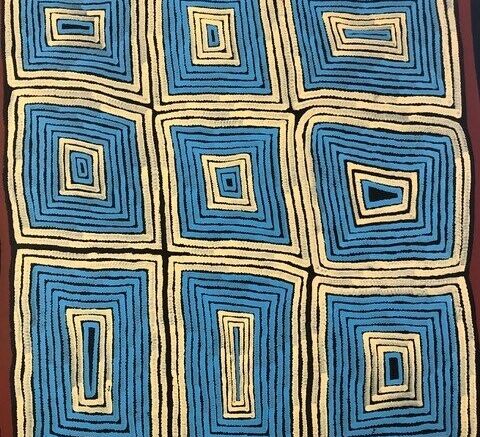
At 3 Neave Street, Hawthorn East, Outback Aboriginal Art offers a way to look closely at paintings and objects from Aboriginal artists without beginning in a large public gallery. Visits are by appointment, and the business also presents its collection online. The gallery's story begins in 1992, when Jennifer Dudley established it to exhibit and promote Aboriginal art from the Central and Western Deserts and beyond.
The current Gallery & Sales page describes a family continuing that work. It explains that, following Jennifer's death, her family chose to keep running the gallery and sell the remaining collection. That makes an appointment more important than assuming conventional shopfront hours: the website directs visitors to phone or message before coming to Neave Street.
A collection built through art centres
The gallery's account of its beginnings says Jennifer sourced works from Aboriginal art centres and promoted both established and emerging artists. Its stated purpose was to exhibit the work, and the business continues to organise its online catalogue around paintings, bark paintings, collection pieces and artefacts.
That account is the gallery's own description of its sourcing history. It does not replace enquiries about an individual work, its artist or its provenance. The website's buyer information is specific about one part of the process: the gallery says artworks are supplied with a Certificate of Authenticity, including the information it holds about the artist, an image and a description of the work.
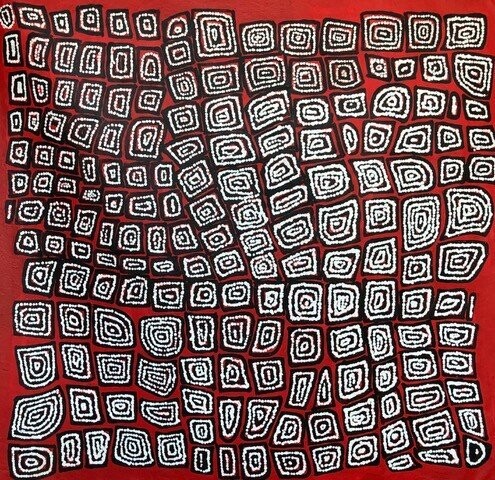
For someone considering a first purchase, those details provide a starting point for a conversation rather than a reason to rely on a general claim about every artwork. The individual catalogue entry and the documentation for that work are the relevant references.
Looking at the work, not guessing its meaning
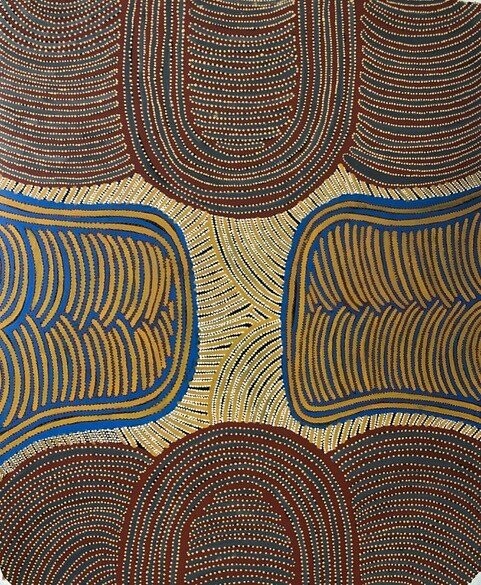
The website divides paintings into small and major works and also maintains a Collections section. Entries identify artists, titles, dimensions and catalogue numbers; some specify materials and whether a painting is stretched. These are practical details that allow an enquiry to begin with a particular work rather than a vague description of a colour or pattern.
The Collections page includes Tingari works credited to Ronnie Tjampitjimpa and Thomas Tjapaltjarri. It also lists Womans Ceremony by Ada Bird Petyarre, as well as works credited to Lorna Fencer Napurrula, Ian Abdulla, Lindsay Bird Mpetyane and Gertie Huddleston. These are catalogue examples, not an assertion that every listed work will still be available at the time of a visit.
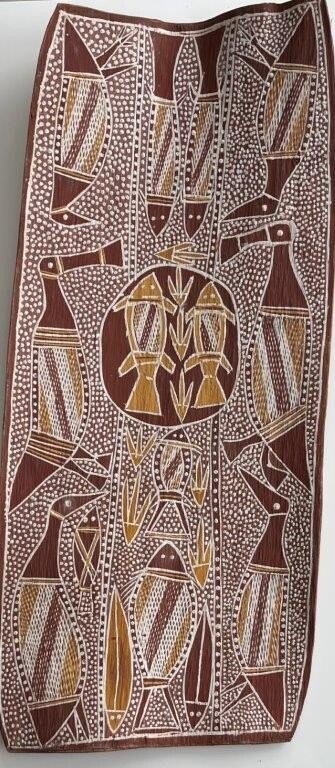
Titles identify the works without requiring a visitor or a feature article to invent an interpretation of their imagery. Any account of a painting's story should come from the artist's authorised information and the documentation supplied, not an assumption based on how it looks.
Bark, canvas and objects within the same catalogue
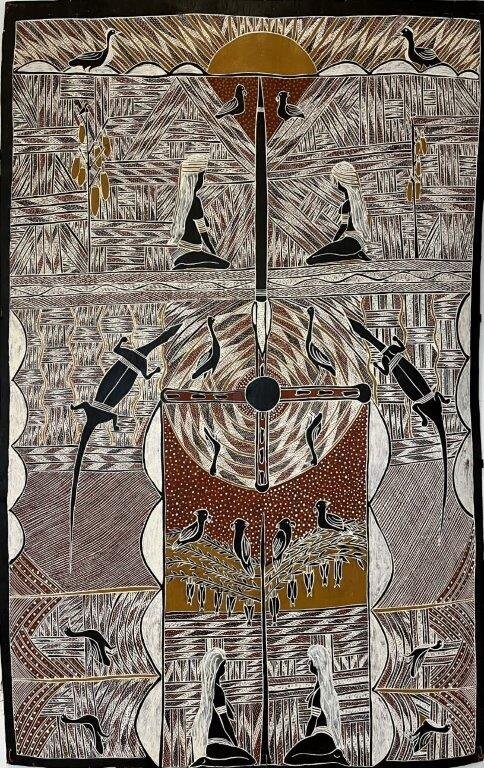
The selection is not limited to acrylic paintings on canvas or linen. The Collections page also identifies ochres-on-bark works, including a work credited to Mawalan 2 Marika and Pelikan and Fish Dance by Walipurru. The material is recorded in the listing, making it part of understanding the object rather than simply a decorative description.
Other entries include coolamons with burnt carving or burnt designs. The gallery also describes artefacts and a stockroom of larger pieces in different sizes and styles. These categories are useful signposts, but they should not be treated as interchangeable objects or as a basis for unverified claims about age, use or cultural meaning.
The online photographs allow a preliminary look before an appointment. They do not establish the physical condition of a work, how it will appear in a particular room or whether it meets a visitor's needs. Those are questions for the gallery and the individual artwork's records.
An enquiry tied to a particular artwork
The buyer-information page asks prospective buyers to include the artist's name and catalogue number when enquiring about a painting. It says stretching can be arranged and describes shipping with a tracking number. These are the gallery's published arrangements, to be confirmed for a particular work and destination rather than assumed from a general page.
The distinction between stretched and unstretched work matters in the catalogue itself. Some entries are explicitly described as stretched and ready to hang; others refer to a separate stretcher. Bringing the catalogue number into the discussion helps keep those details attached to the right artwork.
Visiting the Hawthorn East gallery
The Gallery & Sales page gives the Neave Street address, while the contact page directs appointment enquiries to the current gallery contacts. There are no regular public opening hours to reproduce. A visitor can begin with the online collection, then ask which works can be viewed and arrange a time.
Outback Aboriginal Art's local presence is a small, appointment-based one, with a collection built over a much longer period. Begin with an artist or a particular work. Let the records, the material and the viewing guide the next question.
Visit Outback Aboriginal Art
Address: 3 Neave Street, Hawthorn East VIC 3123
Phone: 0499 292 925 (gallery appointment enquiries)
Hours: By appointment; phone or message the gallery before visiting
Website: https://outback-aboriginal-art.com/
Email: outback@i.net.au