Elwood Vet at 116 Ormond Road sits in the middle of Elwood's village shops, offering consultations, diagnostic testing, surgery and hospital care from the same local practice. Its website sets out a particularly useful detail for a new client: a standard appointment is allocated 20 minutes and a first appointment for a new patient 40 minutes. The extra time is intended to make room for the history, examination and discussion that come before a treatment decision.
A team with different clinical interests
The practice's team page names veterinarians Deborah Clift, Nicole Cook, Julia Thompson, Sonia Thakur, Craig Goode and Hollie Kerr. Their published biographies describe different areas of interest and experience, rather than presenting every clinician as having the same background.
Deborah graduated from the University of Melbourne in 1994 and worked in Melbourne and overseas, including owning a practice in Hong Kong. The website says she, Raquel and Craig bought Elwood and Albert Park Vets in 2017. This feature concerns the Ormond Road practice, not the separate Albert Park location.
Nicole's profile records Membership in Small Animal Internal Medicine through the Australian and New Zealand College of Veterinary Scientists, with interests in complex medical cases and diagnostic ultrasound. Craig's profile describes a surgical internship at the University of Melbourne and a particular focus on orthopaedic work. Hollie graduated from the University of Adelaide in 2019 and has interests in clinical pathology and soft-tissue surgery.
Those biographies are useful context, but the practical question is which clinician and appointment suit an individual animal. The practice encourages clients to see a vet whose communication style they feel comfortable with, and says referrals are used when care is needed outside its own services.
What happens in a consultation
Elwood Vet describes a consultation as a sequence: establish the reason for the visit, gather a history, examine the animal, discuss findings and consider the options. The next step may be treatment, investigation or no immediate intervention, depending on the case.
The explanation is directed as much at the owner as the patient. The practice describes emailing consultation notes where an address is on file, supplying fact sheets and arranging follow-up discussions. Its homepage now says the online client portal has been retired and invites clients to email for medical records or vaccination history. These are ways to revisit information after leaving the room, not a substitute for an examination.
The practice also encourages owners to ask about options, likely benefits and harms, and what might happen without a proposed investigation or treatment. This is a description of its consultation approach, not advice about any reader's pet. A profile of a clinic cannot determine which choice is right for an individual animal.
Prevention matched to the patient
Preventive care includes vaccination, parasite control, dental care, nutrition and routine examinations. The website's discussion goes further than a reminder for an annual visit: it says prevention should be tailored to the animal's risks and circumstances.
It distinguishes preventing a problem from detecting one early, managing an established condition and avoiding unnecessary testing or treatment. That last point is an important qualification to a long service list. The presence of a test or machine does not mean every patient needs it.
Owners can use the consultation to discuss the animal's history and the purpose of any proposed preventive measure. The article does not reproduce vaccination schedules or product recommendations, which require current veterinary advice and details about the particular pet.
Imaging and laboratory work in-house
The practice lists ultrasound, digital X-rays and an in-house laboratory among its diagnostic services. Ultrasound is used when a vet considers it helpful for diagnosis; the website says it does not book scans for patients the practice has not seen.
Digital X-rays are used for questions involving structures such as bones, chest and teeth, as well as selected surgical and other investigations. The practice may use sedation or an anaesthetic where movement, discomfort or positioning makes it necessary. Preparation depends on the case and should be explained by the treating team.
The in-house laboratory can perform a range of blood and urine tests. Some samples still need to go to a specialist laboratory, and results can take longer depending on the test. An in-house service therefore does not mean every answer is available immediately or every investigation can be completed without referral.
Surgery and a hospital ward
Elwood Vet lists soft-tissue, orthopaedic, emergency and dental procedures. Its service page says all vets perform surgery, while Craig takes on much of the complex orthopaedic and soft-tissue work. Spinal surgery is generally referred to a specialist.
Hospital care is another part of the practice. When redesigning the ward, the team chose custom-made fibreglass cages rather than the usual stainless-steel format. The stated reasons were comfort, warmth, lower noise and ease of cleaning. Cat enclosures have ventilated Perspex doors so staff can observe patients with less disturbance.
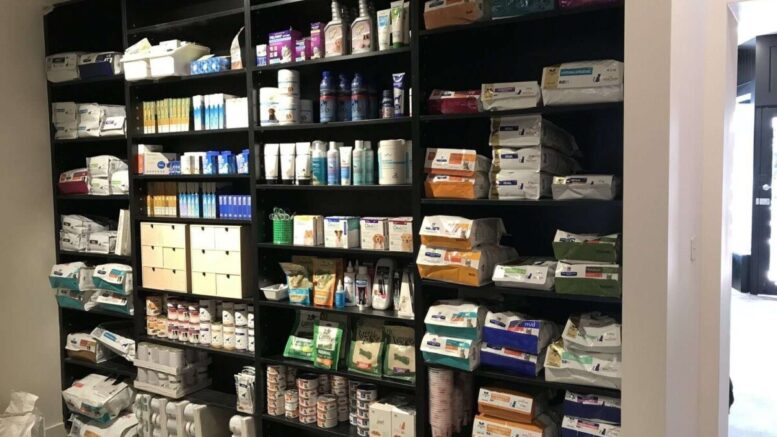
The practice also dispenses many prescribed medicines through an in-house pharmacy. Its repeat-prescription policy requires an existing patient, a recent consultation and a valid prescription in the notes. The website asks clients to allow at least 24 hours for dispensing, with longer lead times where a medicine must be specially ordered.
Those arrangements are worth understanding before medication runs out. They do not authorise a repeat for every request; the treating vet determines what is appropriate and whether another consultation is needed.
Arriving at Ormond Road
Consultations are listed from 8am to 7pm Monday to Friday and 9am to 4pm Saturday. The website notes that the village location is easy to find but parking nearby can be difficult, suggesting Docker Street if Ormond Road is full. Drivers should still check current parking signs.
The practice provides after-hours emergency contacts elsewhere on its site. Its ability to perform some emergency surgery during its service does not mean the Ormond Road clinic is a round-the-clock emergency hospital. In an urgent situation, owners should phone for current instructions rather than rely on a general profile.
For a planned visit, the useful starting point is time to explain the problem and understand the proposed next step. Elwood Vet's published appointment structure puts that conversation at the centre of its village practice.
Visit Elwood Vet
Address: 116 Ormond Road, Elwood VIC 3184
Phone: (03) 9531 1771
Hours: Monday–Friday 8am–7pm; Saturday 9am–4pm; closed Sundays and public holidays. Check their website for current hours and after-hours instructions.
Website: https://www.elwoodvet.net/
Email: hello@elwoodvet.net
Instagram: https://www.instagram.com/elwoodvet/