
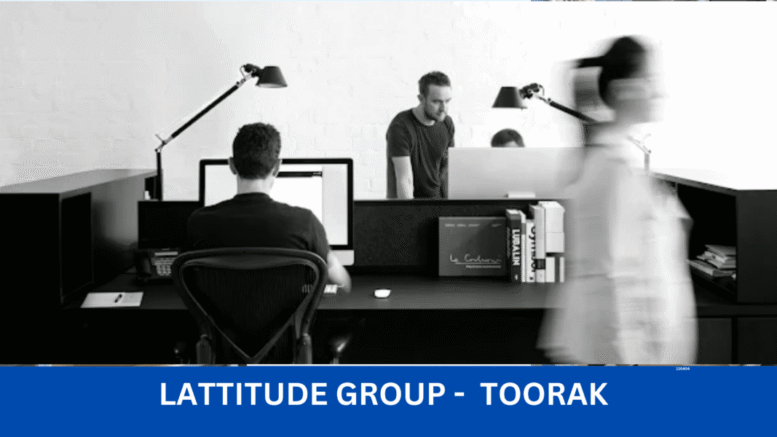
On the upper levels of Toorak Village, above one of Melbourne’s most recognisable stretches of Toorak Road, sits a design practice that has spent more than two decades quietly shaping how buildings, precincts and brands are seen and used. Latitude Group — also known as Studio Latitude — is an integrated design studio whose work sits at the intersection of branding, digital, environments and photography. From wayfinding in complex retail precincts to identities for leading architecture practices, the studio’s output is designed to last.

Toorak Village, the leafy commercial heart of one of Melbourne’s most established suburbs, is an apt home. The street mixes heritage shopfronts, plane trees, trams and a growing stock of contemporary commercial buildings. Level 3, 489 Toorak Road places the studio in the St Germain precinct — a modern office and retail address in the centre of the village — close to the architects, developers, retailers and property groups that form much of its client base.
From a graphics studio to an integrated practice
Latitude Group was founded in 2003 by Andrew Wood, Filip Bjazevic and Peter Clarke. What began as a graphics and photography studio grew, by design rather than by accident, into a multidisciplinary practice. Wood brought design and publishing experience; Bjazevic brought creative direction; Clarke brought photography and a strong visual language. Over time the studio added digital capability, environments and spatial design, and a dedicated environments director in Daniel Dalla Riva.
The founding idea remains the same: good commercial outcomes come from crossing disciplines rather than treating brand, website, signage and photography as separate jobs. The studio describes itself as an integrated design practice whose strength is a multidisciplinary team and the “cross-pollination” between those disciplines. Strategy, identity, digital and spatial work are developed together so that a brand can live consistently across a website, a building foyer, a wayfinding system and a set of photographs.
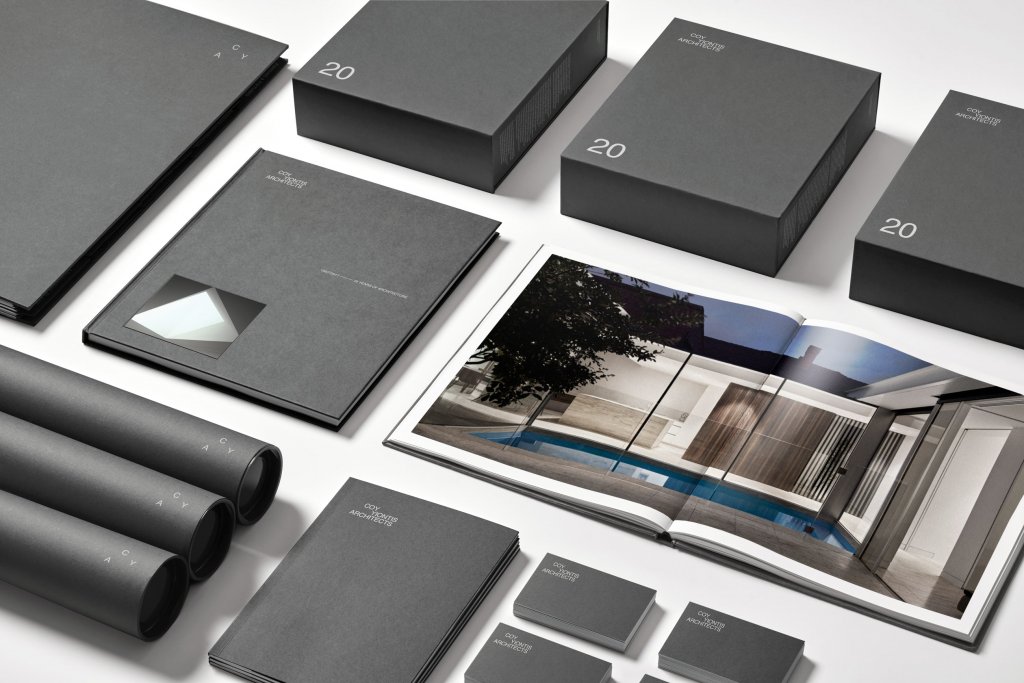
That approach has made Latitude a natural partner for architecture and design practices. The studio speaks the same language as architects and interior designers, and it understands how a practice actually operates — from positioning and identity through to websites, publications, events and the photography that documents finished work. Long-standing relationships with practices such as Mim Design, Coy Yiontis Architects, B.E. Architecture, Breathe Architecture, Inarc, SJB, Hayball, Bates Smart and Woods Bagot sit alongside work for developers, institutions and public clients.
What the studio actually does
Latitude organises its work around five connected areas.
Strategy covers brand strategy and positioning, brand architecture, digital strategy, placemaking strategy and content strategy. Brand work includes identity design, marketing and communications, brand guidelines, property branding, placemaking, packaging and product design. Digital covers website design and build, user experience, digital campaigns, ecommerce, WordPress development, app design and digital content. Built environment work includes brand activation, signage and wayfinding systems, exhibitions and installations, commercial showrooms, interior design, hospitality and retail design, and experience marketing. Image work, led by Photography Director Peter Clarke, includes architectural photography, brand image creation, building documentation, film and motion, aerial imagery, grading and retouching.
The practical effect is that a client can brief one studio for a new identity, a website, a wayfinding suite and the photography that will launch the project. That single-studio model is particularly useful on complex sites — shopping precincts, cultural buildings, clubhouses and multi-level developments — where signage, digital wayfinding and brand language have to work together.
Projects that show the range
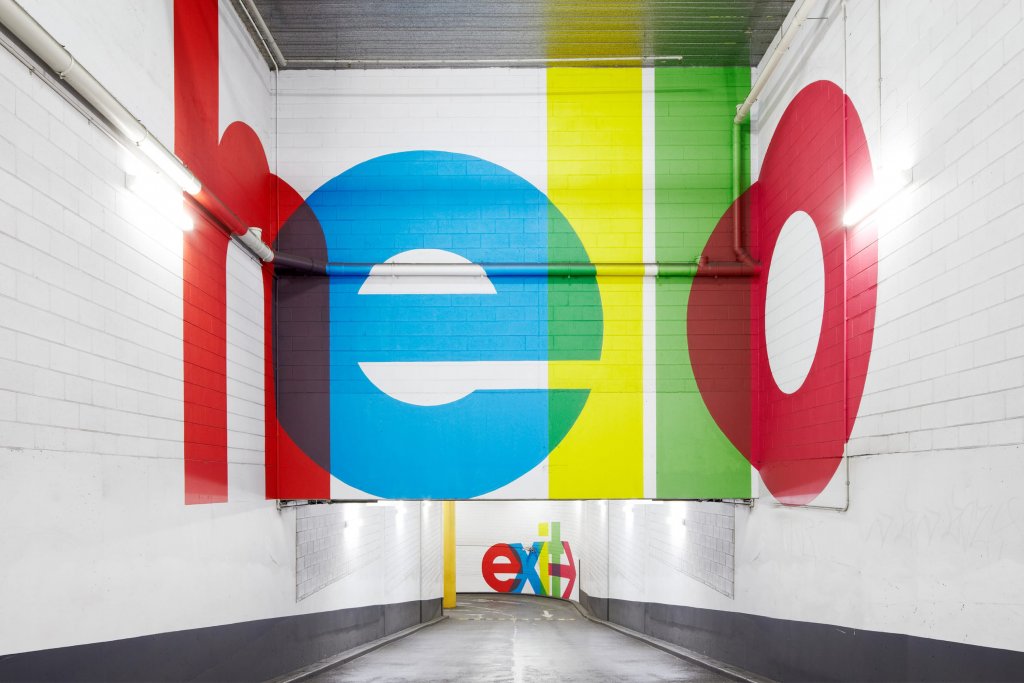
One of the studio’s most visible public projects is the wayfinding system for QV Melbourne, the open-air retail precinct in the heart of the city. Latitude was briefed to design a system that sat comfortably with the existing architecture and the precinct’s progressive brand language. The team used a restricted colour palette, custom typography and angular forms inspired by QV’s layered laneways and multi-level structure. The commission ran from strategy and mapping through site audits, tendering, documentation, contract management and quality control, working with Grocon, the City of Melbourne and fabricator Diadem. A companion project brought large-scale environmental graphics into the QV car park, drawing on early modernist graphic design and hand-painted type on existing brickwork.
Another civic project is Berninneit, the cultural and community centre on the Bass Coast designed by Jackson Clements Burrows Architects. Latitude developed the building identity, wayfinding strategy and signage. The geometric, modular suite uses a considered type family and a bespoke icon set so that wayfinding supports rather than competes with the architecture. The work received an Award of Distinction in the AGDA Design Awards for Wayfinding and Signage. The building itself has been recognised in the AIA Victorian Architecture Awards and the Australian Interior Design Awards.
Other documented projects include identity and wayfinding for Huntingdale Golf Club, developed with Inarc Architects around a new clubhouse; digital and brand work for practices such as Coy Yiontis Architects and Mim Design; ecommerce for Arthur G; and a wide range of property branding and placemaking for developers and centres. The client list published by the studio is long and weighted towards architecture, construction, property and design: La Trobe University, Development Victoria, Charter Hall, Dexus, GPT, Vicinity Centres, Nightingale Housing, Schiavello, Living Edge, Laminex, Dulux Group and many others.
Architectural photography remains a core part of the offering. Peter Clarke’s work documents buildings and interiors for the practices Latitude also brands — a closed loop that is useful for architects who want a consistent visual story from first identity through to published project.

Why the model still matters
Multidisciplinary studios are common. What distinguishes Latitude, according to its own account and to coverage in Australian Design Review, is the combination of longevity, commercial focus and a genuine understanding of the architecture and design community. The studio has been operating since 2003. It has grown by following client need — a logo leading to a brand system, a brand system leading to a website, a website leading to environmental graphics — rather than by chasing every new channel.
The senior team is still small and senior. Andrew Wood is Managing Director. Filip Bjazevic is Creative Director. Krystal Ting is Account Director. Daniel Dalla Riva is Environments Director. Peter Clarke is Photography Director. That structure means clients typically deal with people who can move between strategy, design and delivery.
Good design is treated as the outcome, not the decoration. The studio’s published profile puts it plainly: strategically focused brand, digital and spatial capabilities shape how the studio works, “always with good design being the key outcome in mind.” Commercial success is part of the brief. The work is expected to help a practice win projects, help a precinct function, or help a product sit clearly in the market.
Toorak as a working address
Toorak Village is more than a prestige postcode. It is a working commercial strip with a high concentration of property, legal, design and advisory firms. Being on Toorak Road puts Latitude within walking distance of many of the practices and developers it serves, and within easy reach of the inner south-east architecture community that has been a core market since the early years.
The village itself is a useful reminder of the studio’s subject matter: heritage fabric next to new commercial buildings, public realm that needs clear wayfinding, and brands that have to work both on a shopfront and on a screen. Latitude’s own address — Level 3, 489 Toorak Road — sits in that mix.
A studio built for the next brief
Two decades on, the original proposition still holds. Brands live in more places than they did in 2003 — websites, apps, physical environments, photography and short-form film — but they still need a single idea and a consistent language. Latitude Group’s value is that it can hold that idea across those places without handing the project from agency to agency.
For architecture and design practices, developers, institutions and retailers who want strategy, identity, digital and environments under one roof, the Toorak studio remains a practical place to start.
Contact Latitude Group
Latitude Group
Level 3, 489 Toorak Road
Toorak, Victoria 3142
Australia
Telephone: (03) 9529 5299
Email: info@latitude.com.au
New project enquiries: Andrew Wood — andrew@latitude.com.au
Website: www.latitude.com.au
Senior team: Andrew Wood, Managing Director; Filip Bjazevic, Creative Director; Krystal Ting, Account Director; Daniel Dalla Riva, Environments Director; Peter Clarke, Photography Director.


