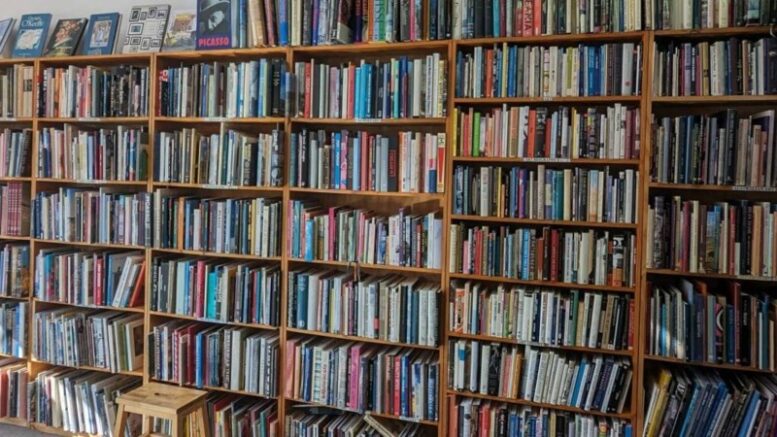
At 534 Riversdale Road in Camberwell, Sainsburys Books sells second-hand books across art, architecture, photography, literature, history and philosophy. The shop’s website describes more than 35 years in business, with a retail shop and online catalogue working alongside one another. A browse can begin with a broad subject, but anyone seeking a particular title is asked to contact the shop before visiting: not every item in its extensive collection is held at the Camberwell premises.
It began with too many books
John Sainsbury’s route into bookselling started with his own overflowing collection. In a January 2016 profile published by Camberwell’s shopping association, he explained that he had begun selling books he no longer needed at Camberwell Market. A physical shop in Burke Road followed, before the move to Riversdale Road.
That account gives the business a personal starting point rather than a carefully chosen retail category. The first stock came from a reader making room; the shop grew from the work of buying and selling books and learning what other readers wanted. The current website continues to describe the business through its broad subject specialities, not simply through the newest releases.
The 2016 profile is also a record of how John thought about the trade. He spoke about enjoying the physical experience of books, buying collections and seeing how the design and culture of books had changed. Those are historical observations from the interview, rather than a claim that the business still follows every buying routine described a decade ago.
A collection with a visual-arts centre
Art, architecture and photography are prominent in the shop’s own description. They sit alongside literature, history and philosophy, giving the catalogue room for both visual and text-led subjects. The business says new stock arrives daily, so the website is a way to see what has recently joined the selection as well as a place to search for a particular title.
For someone whose interest is more specialised than a general fiction shelf, that breadth of subjects is practical. A catalogue can narrow the field before a visit, while the shop’s broader categories leave room to browse beyond the subject that first prompted a search. The exact item and its location still need to be checked with the bookseller.
Finding an old edition again
In the shopping association’s 2016 interview, John described customers trying to complete collections of children’s books they remembered from their own childhoods. He also talked about fiction readers looking for a recently missed title or returning to a much older classic. The detail explains something about the shop’s history without pretending to measure what customers are buying today.
The same interview described several routes by which stock reached the shelves: collections, books brought in by customers and buying trips. It is a historical picture of second-hand bookselling built around individual copies rather than a uniform run of new stock. Current buying arrangements should be discussed with the business, not assumed from that older profile.
Its online catalogue provides another point of entry for a reader searching for one specific book. The business’s own contact page makes clear why a call or message matters: a book listed within the wider collection may not be at the shop when a visitor arrives. The distinction is especially useful for an out-of-print or specialist title that is the sole reason for a trip.
A shop and a catalogue, side by side
The current business operates both online and from Riversdale Road. That combination is not new in its story: the 2016 profile already described website orders for particular titles and books needed to complete a collection. Today’s homepage continues to make the distinction between browsing the catalogue and visiting the store.
The shop’s published contact details give a direct phone number and an email address for enquiries. Neither requires choosing a book first. A customer can begin with the title they want to see, ask whether it is held in Camberwell and arrange the next step with the bookseller.
Why locals come back
According to local reviews, readers appreciate the second-hand and specialist selection and the help available from the staff. Comments about online orders also mention careful packaging and communication. Those accounts describe individual purchases and visits, rather than promising that a particular title will be in stock.
There is no need to turn every visit into a hunt for a rare discovery. The published range includes familiar reading subjects as well as specialist interests, and the appeal described in the shop’s long record is as much about following a curiosity as completing a collection. The catalogue is a starting point, not a substitute for asking about the physical copy.
Planning a Riversdale Road visit
Sainsburys’ own contact page publishes Wednesday to Saturday hours of 10am to 5pm and Sunday hours of noon to 4pm. Older external listings show a different pattern, so the shop’s own current information is the reference used here. Monday and Tuesday hours are not supplied on that contact page.
For a general browse, start with a subject. For a particular book, start with a call. At Sainsburys Books, both approaches lead back to a Camberwell business that began with a reader’s collection and still makes room for many different kinds of reading.
Visit Sainsburys Books
Address: 534 Riversdale Road, Camberwell VIC 3124
Phone: (03) 9882 7705
Hours: Wednesday–Saturday 10am–5pm; Sunday noon–4pm. Contact the shop about other days
Website: https://www.sainsburysbooks.com.au/
Email: john@sainsburysbooks.com.au
Good to know: Contact before travelling to view a particular item; some collection stock is not held at the Camberwell shop