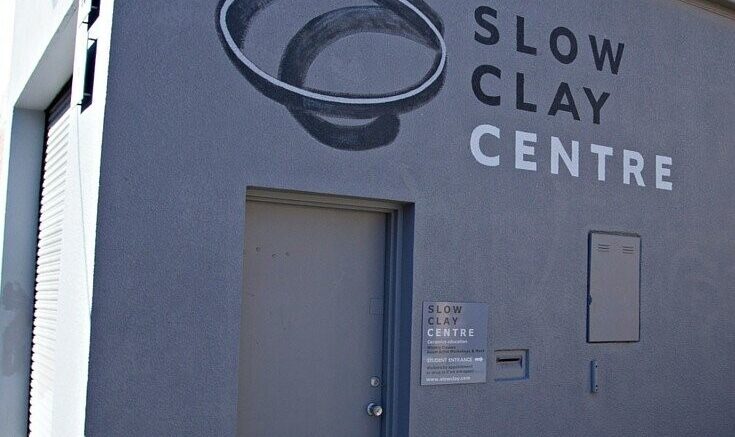
On Keele Street, near Collingwood's Smith Street strip, Slow Clay Centre at 13 Keele Street offers something different from a workshop built around copying a finished object. Its approach is to teach people how to work with clay, then give them room to discover what they want to make. A first experiment at the wheel and a serious interest in developing a studio practice sit on the same educational pathway.
The school traces its beginnings to a private school established in 1990 and a significant expansion in 2012 by ceramic artist and educator Jane Sawyer. Its published mission is to support potters and ceramic artists through education, employing practising artists and taking individual expression seriously. The name is less an instruction to work at one speed than an invitation to develop knowledge over time.

Start with a material, not a prescribed result
Slow Clay is explicit about avoiding product-led, step-by-step workshops with a predetermined decorative outcome. It wants technical development and creative thinking to grow together. For a new student, that means the aim is not simply to reproduce the teacher's mug. It is to begin understanding a material and the choices involved in shaping it.
That does not mean leaving beginners without structure. The centre describes a carefully organised curriculum built around creative enquiry, design exploration and technical development. The balance is important: freedom is more useful when supported by skills, and technical exercises have a purpose when they help a student express an idea rather than merely complete a task.
The published program accommodates several starting points. A two-hour taster introduces the wheel, while the eight-week Beginner's Wheel course offers a longer sequence of learning. Form & Surface handbuilding provides another route for people interested in working without the wheel. Neither approach needs to be treated as a lesser version of the other.
The Japanese techniques behind the Slow Clay method
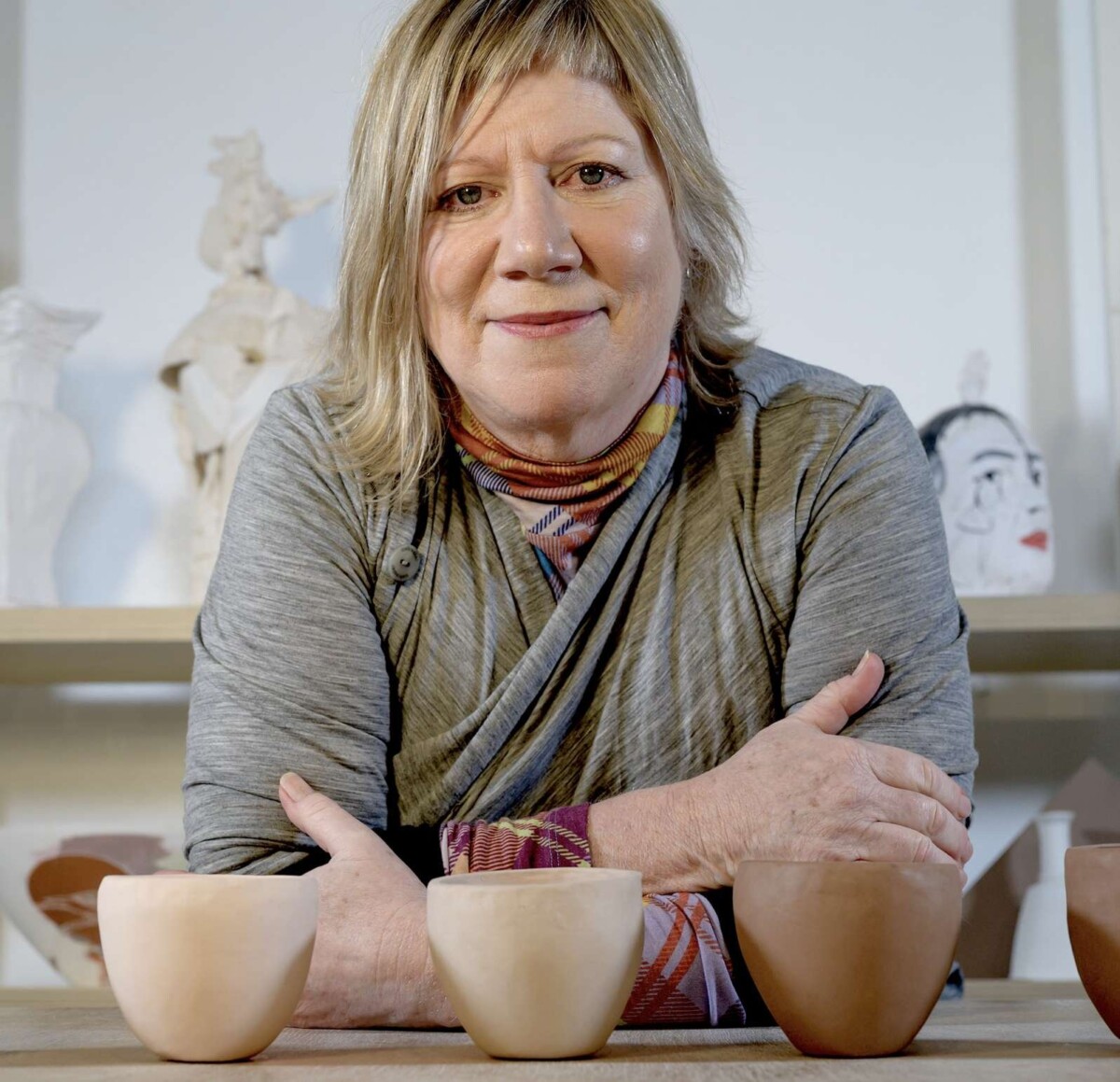
Sawyer's wheel-teaching method draws on Japanese production-throwing techniques. The centre describes her apprenticeship experience with Andrew Halford in Australia and at Shussai-Gama pottery in Japan, alongside qualifications in art education and a Master of Fine Art. That background informs the way the physical movements of throwing are introduced to students.
The stated goal is an ergonomic foundation that can support long-term work with clay. Rather than promising an instant transformation, the method concentrates on how movements are learned and repeated. All the centre's wheel teachers are trained in the approach, which is intended to provide consistency as students move through classes and work with different educators.
The school also makes clear that ceramics extends beyond throwing. Handbuilding and sculpture, clay and glaze studies, and design development are part of its broader teaching interests. Students are encouraged to explore widely before specialising. For someone who arrives assuming that pottery only means sitting at a wheel, that opens a much larger set of possibilities.
A warehouse organised for making
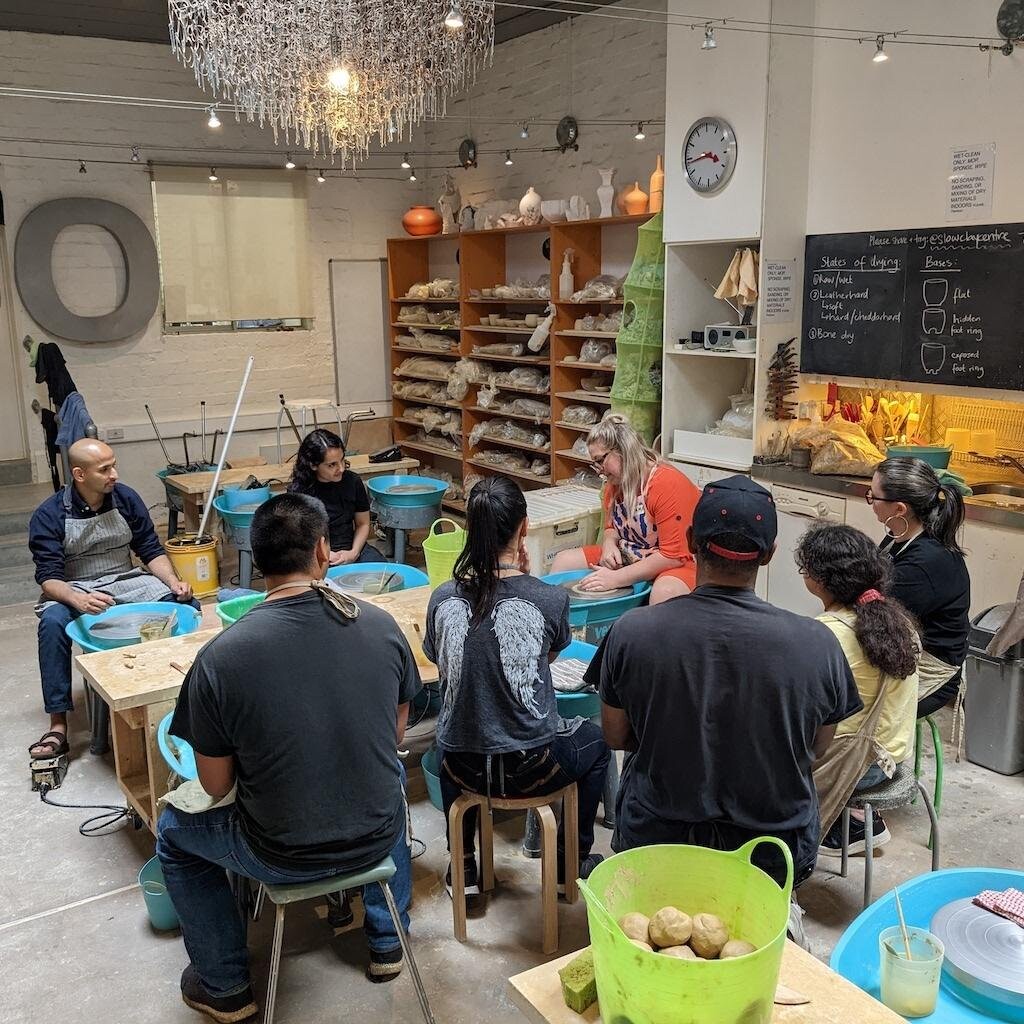
Slow Clay describes its Collingwood premises as a purpose-renovated warehouse, designed to be practical and visually engaging. The wheel room contains 12 Australian-made Venco electronic-drive wheels. A separate handbuilding room has extruders and a slab roller, while preparation and clean-up areas include wedging tables, a glaze station and a recycling station.
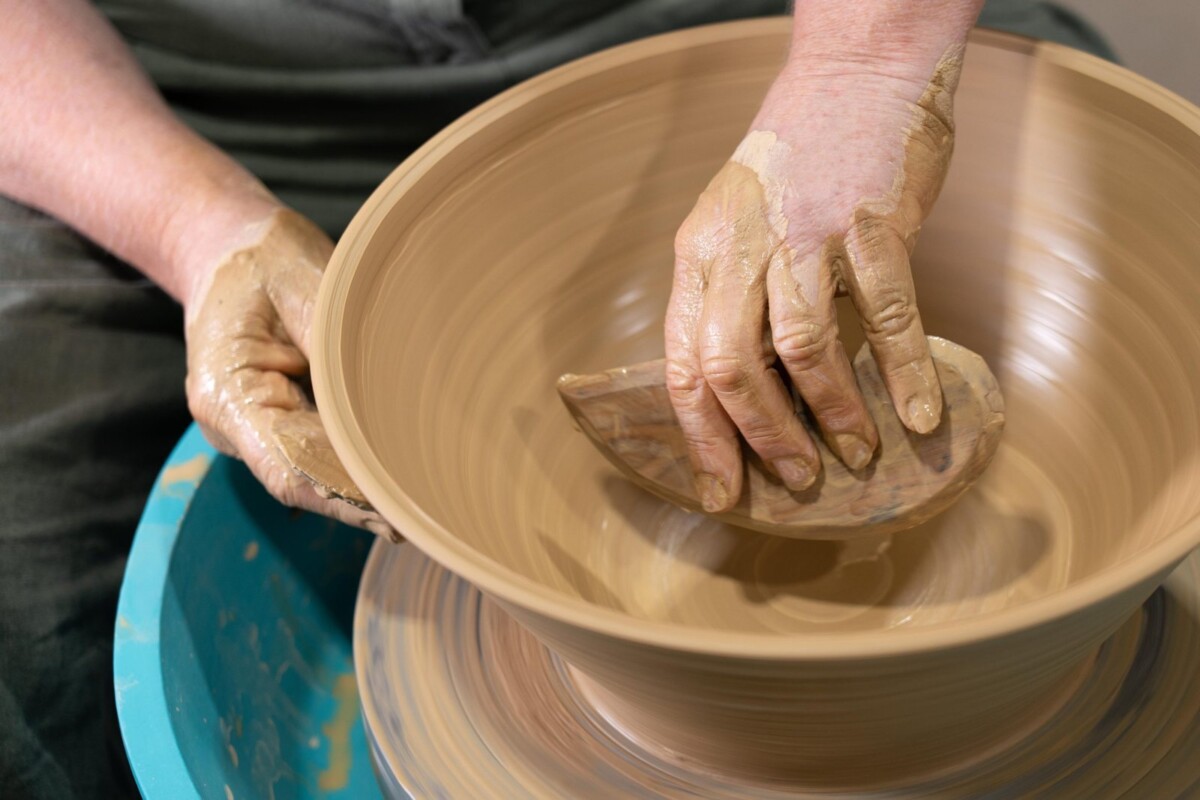
There is also a kiln room with electric kilns, which the centre says are fired using green energy. A courtyard provides room for outdoor activities and bicycle parking. These details give a clearer sense of the school than a photograph of one finished bowl: it is a working teaching environment with spaces for preparation, experimentation, cleaning and firing.
The different work areas also reveal why learning ceramics involves more than the moment an object takes shape. Handling clay, understanding surfaces and glazes, and working within a shared studio all belong to the process. The centre's course information is the place to check exactly which materials, firing arrangements and access conditions apply to a particular enrolment.
Room to keep going after the beginner stage
Intermediate and advanced wheel classes allow students to continue once the first course is over. Form & Surface handbuilding also extends beyond beginners. For more experienced makers, the Studio Practice Program and guest-artist workshops provide specialist and intensive study rather than asking everyone to repeat an introductory format.
Slow Clay says weekly students are eligible for studio access sessions during term and holiday periods. These provide opportunities to practise and explore ideas outside the main class. Because course arrangements and access conditions can change, prospective students should read the current timetable and course page, especially if independent practice time is an important part of their decision.
The centre also lists occasional internships, technical training and one-to-one mentoring with Sawyer. These are described as limited opportunities, not services guaranteed to every applicant. Their presence nevertheless shows that the school considers the practical realities of studio work alongside the satisfaction of making an object to take home.
Teaching the teachers is part of that continuity too. Slow Clay says Sawyer offers training for educators seeking approval to use the Slow Clay wheel method. For students, the relevance is the attention given to how knowledge is passed on: the centre treats teaching as a practice to be learned, not simply something that follows automatically from being able to make a pot.
Taking the environmental cost of ceramics seriously
The centre's environmental statement does not pretend that clay work is impact-free. It acknowledges extraction of clay and glaze materials, kiln firing and waste, and describes a continuing effort to improve its practice. That is a more useful starting point than treating a handmade object as automatically sustainable simply because it is made by hand.
Slow Clay identifies itself as a founding member of Clay Matters, a group concerned with researching and sharing better practice. Its stated measures include sourcing local clays, tracing materials, using green energy for firing and recycling waste. These are the centre's own published commitments, rather than an independently audited environmental assessment.
For a prospective student, the practical next step is to choose a starting level and consult the current timetable. This is a teaching studio, so the time for an enrolled class is more relevant than assuming ordinary shop-style opening hours. The centre publishes its Keele Street address and a phone number for enquiries, and its website links to its programs.
A first pot need not be perfect. At Slow Clay, it is the beginning of learning how to make the next one.
Visit Slow Clay Centre
Slow Clay Centre
Address: 13 Keele Street, Collingwood VIC 3066
Phone: (03) 9943 7844
Hours: Class and studio-access times vary; consult the current timetable
Website: https://www.slowclay.com/