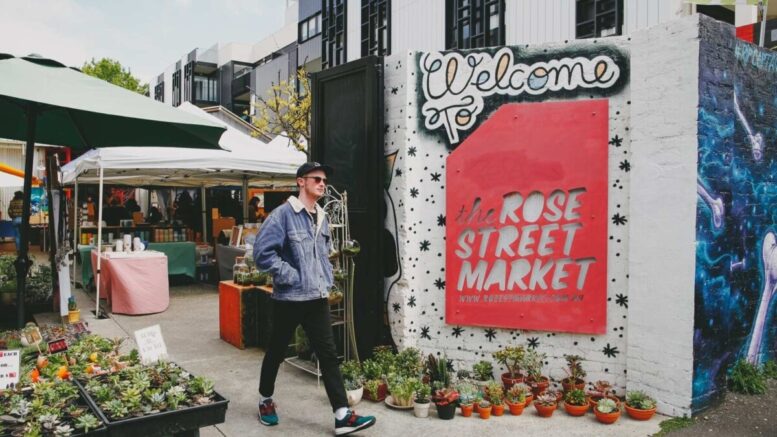
Between Brunswick and Nicholson streets, The Rose St. Artists’ Market at 60 Rose Street, Fitzroy turns a back-street address into a weekend meeting place for makers and the people interested in their work. The attraction is not simply a collection of things to buy. It is the opportunity to encounter an object alongside someone who can explain how and why it was made.
The market says a small part of Rose Street has come to life in this way each weekend since 2003. Its setting is a former junkyard, repurposed as a place for emerging and established artists and designers to show their work. That history suits the format: an overlooked site becomes a public platform, while a passing visitor can discover work that does not have a permanent high-street shopfront.
A local idea with international points of reference
The organisers describe the market as loosely inspired by creative projects in London, Berlin and New York, particularly the DUMBO Collective beneath the Brooklyn Bridge. The link is the idea of giving artists a direct outlet, not reproducing another city's market stall by stall. Rose Street's setting and participants make it a Fitzroy version of that broader approach.
Its About page identifies Adam F as founder and artistic director and Christian F as co-founder and operations manager. Adam's background is in the arts, including a VCA scholarship and recognition at the Melbourne Fringe Festival; Christian brings business-marketing experience. Those different roles help explain the combination of a curated creative identity and the practical work of running a recurring public market.
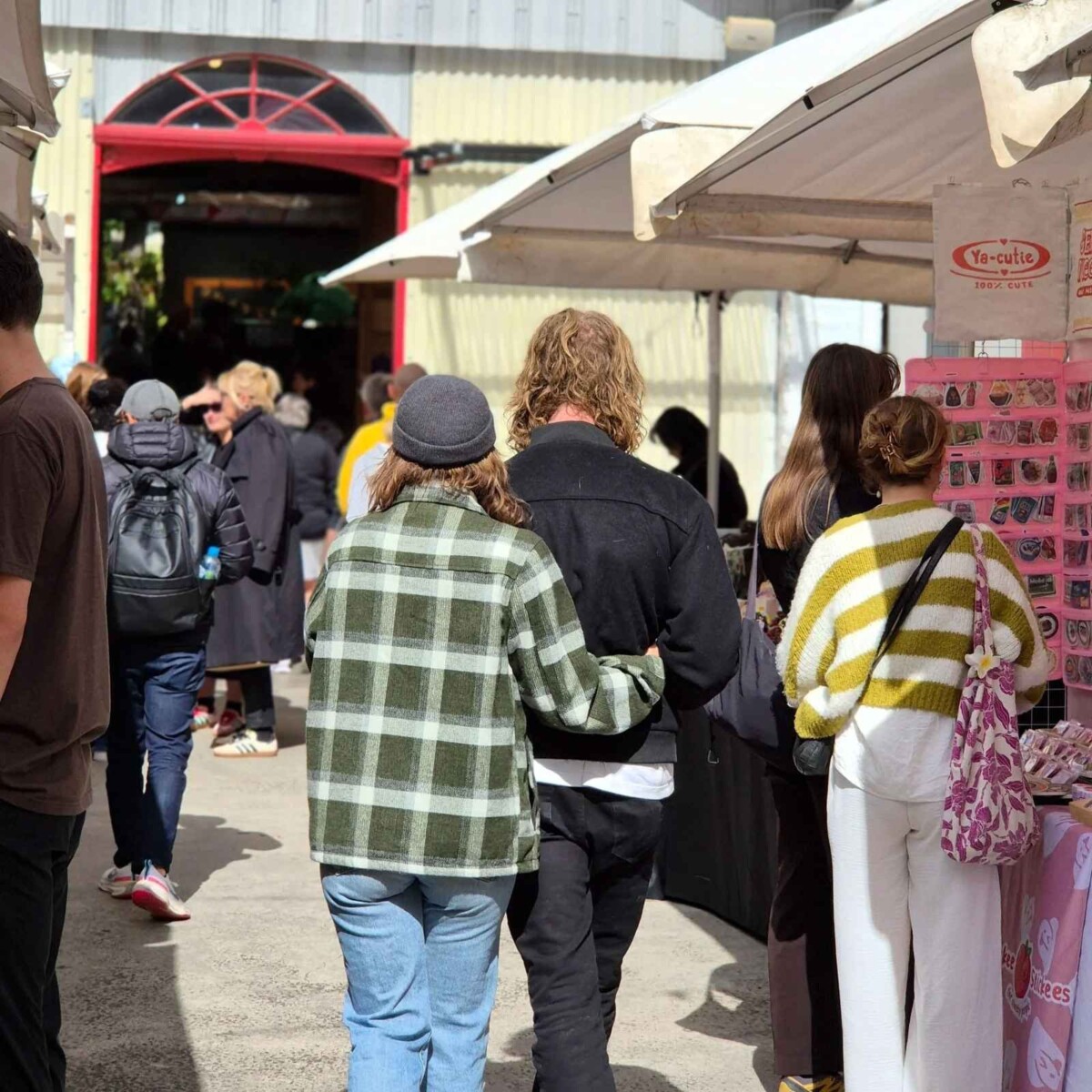
The organisers say the venue can showcase work by up to 120 artists and designers on a weekend day. That is a statement of the market's scale, not a promise of an exact headcount on every visit. Weather, individual schedules and the current stallholder program all make the particular mix something to discover rather than a fixed inventory.
The point is the person behind the object
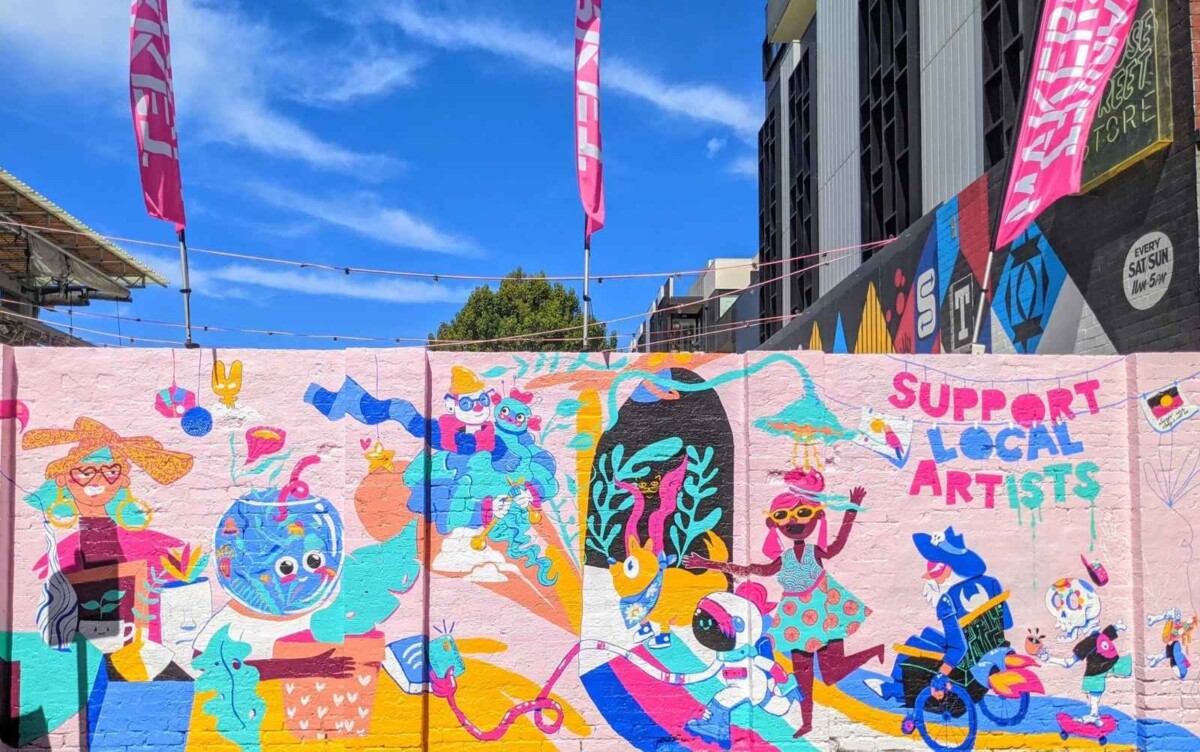
Rose Street's own description puts meeting, greeting and speaking with artists at the centre of a visit. For someone interested in a piece, that can make the difference between admiring its surface and understanding the choices behind it. Materials, technique, intended use and the maker's wider practice are all possible starting points for a conversation.
The market also presents itself as a place to source or commission work. A commission is a separate discussion, not something every stallholder is obliged to offer. Where it is possible, a useful first conversation might concern dimensions, materials, lead times and whether the maker's approach suits the intended project.
That direct connection can make browsing worthwhile even without an immediate purchase. Discovering an artist's name or learning how a familiar material has been used may be the most memorable part of a visit. The market format allows interest to develop in stages, with an object, a conversation and a later decision all belonging to the same process.

A changing mix of art, fashion and useful things
The organisers list furniture design, fashion, jewellery and paintings among the kinds of work visitors may encounter. The range spans objects with an everyday function and pieces intended mainly to be looked at. It is not a single-category craft fair, and the current stallholder mix should be checked if one particular discipline is the reason for travelling.
A person looking for a gift can therefore begin with the recipient rather than a predetermined department. Someone interested in jewellery may care about scale and how a piece is worn; someone looking at a small artwork may want to consider where it will live. The maker's presence creates an opportunity to ask those ordinary, useful questions without needing expert vocabulary.
The same principle applies to work for the home. A piece of furniture or a decorative object has to fit an actual room and an actual routine. Dimensions, care and material suitability matter alongside appearance. A market discovery can still be considered carefully; the pleasure of finding something unexpected does not require making a hurried decision.

Emerging and established work share the same setting
Rose Street describes its participants as a mixture of emerging and more established makers. That gives the format a different character from a shop organised around a small group of long-standing suppliers. A visitor may encounter someone at the beginning of a practice beside a maker who has already developed a substantial body of work.
The organisers' interest in fostering emerging artistic talent is explicit in their own account. It is a reason to look beyond the first familiar style or material that catches the eye. The next stand may offer a different interpretation of something recognisable, or introduce a technique the visitor has not previously considered.
There is no need to turn that variety into a claim that every object is unique or that every stall will suit every person. The value is the breadth of independent work available to explore at one address. A return visit can be about following up on a maker, while a first visit can be simply an open-ended look around.
Plan for a weekend, not an ordinary shopping weekday
The market lists Saturday and Sunday opening from 10am to 4pm. Its location page places it between Brunswick and Nicholson streets and points to nearby shops, galleries and public transport. That makes it a possible part of a wider Fitzroy walk, but the market itself remains a weekend destination rather than a seven-day store.
For people travelling from the city, the organisers list tram 96 from Bourke Street, alighting at stop 14, or tram 11 from Collins Street, alighting at stop 17. Transport arrangements should be checked for the day of travel. The market also identifies an all-day car park on Rose Street near the entrance; availability and parking conditions are separate matters to check on arrival.
Dogs are welcome on a lead, according to the visit page. Anyone with particular access requirements should consult the organisers before planning around the site, rather than assume that every part of a market has identical circulation space. A changing collection of stands is still a place where practical questions deserve specific answers.
Leave a little time for the unexpected. At Rose Street, the object that catches the eye may be only the beginning of the story.
Visit The Rose St. Artists’ Market
The Rose St. Artists’ Market
Address: 60 Rose Street, Fitzroy VIC 3065
Hours: Saturday–Sunday 10am–4pm
Website: https://www.rosestmarket.com.au/