
At 5–7 Park Road, Cheltenham, Hotco presents a side of local business that is less about a shop window and more about the components behind industrial heating. The company's website lists heaters and heating elements in ceramic, tubular, immersion, band and other forms. Its own history dates the business to 1954 and describes manufacturing industrial-strength heaters and heating elements in Australia.
For a business with a heating requirement, the practical benefit is a local sales contact attached to a clearly organised product range. The website provides product categories and photographs rather than a single interchangeable solution. Establishing the correct item still requires a specific enquiry: a category name alone cannot determine compatibility, operating conditions or the right specification for a particular piece of equipment.
A manufacturing history behind the catalogue
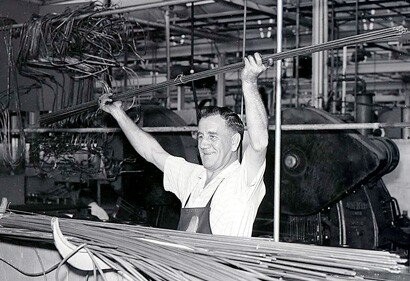
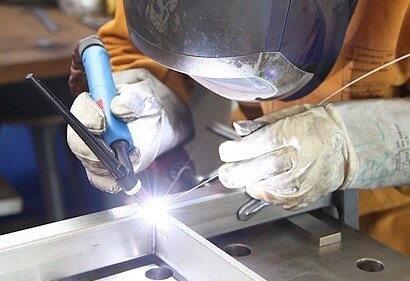
Hotco's About page states that the company was established in 1954. The homepage pairs that history with images of workshop activity and heating elements, and describes products made to exact specifications. Those are the manufacturer's own descriptions, not a claim that every pictured item is currently in stock or suitable for an unassessed application.
The Cheltenham address is the company's published Melbourne contact. The website also lists contacts in other Australian cities, including Brisbane, Sydney, Adelaide and Perth. That broader network does not change the local focus of this feature: the starting point for a Melbourne enquiry is the Park Road office and the sales details attached to it.
Different product families, different questions
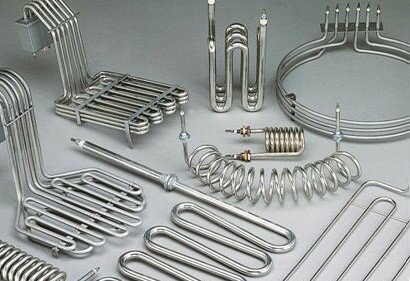
The homepage separates air heaters, band heaters, ceramic heating elements, flat and formed elements, immersion heaters, tubular elements, silicone-rubber heaters and other categories. It also identifies finned air heaters and water heating. The organisation makes the breadth of the catalogue visible without pretending these categories all perform the same task.
The catalogue also names radiant infrared heating and duct heaters within its air-heating offer. These are presented separately from the immersion and ceramic categories, giving an enquirer a way to narrow the subject before seeking more detailed information from the manufacturer.
Named products include pail heaters, belt heaters, stainless-steel band heaters, flat heating elements and tubular heating elements. Each has its own place in the published range. For a reader bringing an existing component or a new requirement to the business, those names are useful vocabulary for an enquiry, but not a reason to choose a replacement solely by appearance.
A closer look at ceramic elements
The ceramic-heating-element page offers more explanation than some of the shorter product listings. Hotco calls these elements ceramic emitters and describes their use of infrared radiation. Its explanation compares the way energy is directed towards solid objects with sunshine, making the principle easier to picture without supplying an installation design.
The same page says the heating wire is encased in a special ceramic and the assembly sealed with a protective glaze. That description identifies a construction detail specific to the published product. It does not establish that an emitter is appropriate for every open area, process or material; suitability belongs in the technical discussion with the supplier.
Photographs are a starting point, not a specification
Several other product pages are brief, pairing a product name and image with the company's contact details. The tubular-heating-element and silicone-rubber-heater listings are examples. Their brevity matters: a reader should not assume a temperature rating, size, electrical specification or application that the page does not actually provide.
The useful next step is to put the requirement to the sales team and ask for the relevant product information. That keeps the conversation anchored to the equipment or process involved. It also separates a general introduction to a Cheltenham manufacturer from technical advice about selecting, fitting or operating an industrial heating component.
Make the enquiry specific to the job
Hotco's contact page invites product enquiries and publishes a Melbourne sales email address along with its phone number. The footer supplies a second Melbourne telephone number and the Park Road address. No regular visiting hours were found on the pages checked, so an unannounced visit should not be assumed to coincide with an open counter.
The range is broad, but the local proposition is straightforward: a manufacturer with a published history beginning in 1954, a catalogue divided into identifiable product families and a Melbourne point of contact in Cheltenham. For readers whose work depends on the right heating element, the value of that introduction is the next informed conversation. Start with the actual requirement, then establish the specifications with the people supplying the component.
Visit Hotco
Address: 5–7 Park Road, Cheltenham VIC 3192
Phone: (03) 9585 1944; (03) 9556 0200
Hours: Contact Hotco before visiting
Website: https://hotco.com.au/
Email: sales@hotco.com.au