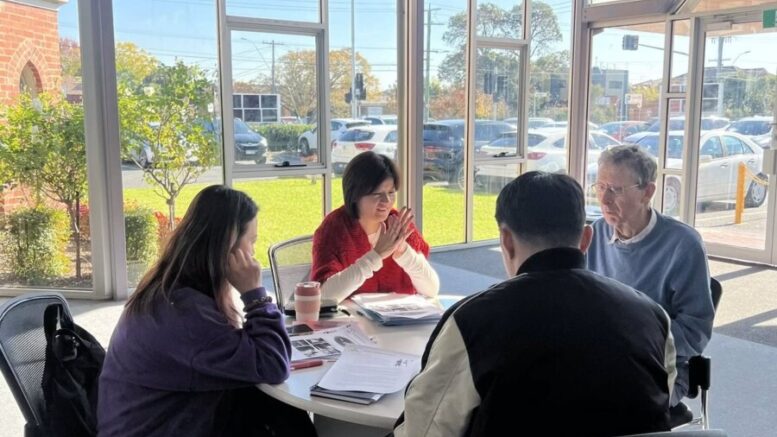
Dixon House Neighbourhood Centre, at 2 Dixon Street, Clayton, gives several different parts of community life a place beside Monash Hospital. English tutoring, computer skills, art, homework support and a Wednesday lunch all belong to its program. Based at All Saints Anglican Church, the centre grew from local members wanting to respond to the needs around them. Today a visitor might arrive to practise conversation, work through a digital question or find a way to contribute as a volunteer. The shared address brings those different reasons for coming together into one neighbourhood setting.
A local beginning, with room for different people
Dixon House began with members of All Saints Anglican Church seeking ways to support the surrounding community. Education, practical assistance and opportunities to participate became part of that work. Its history reaches back more than twenty-five years, giving today's program a foundation in an established local organisation rather than a newly announced project.
The centre's values include inclusion, reciprocity, education and partnerships. Those ideas have practical expressions in the mix of activities. Someone can be a learner in one setting and bring a useful skill to another. A resident seeking help with English may have experience to share elsewhere; a volunteer offering computer support may find another interest in the wider program.
Partnerships with Anglicare and All Saints Clayton form part of the centre's background. Its current work brings classes, community activities and support into the same local setting, with part-time staff supported by volunteers. The scale is personal enough for an enquiry to begin with a question, while the range gives people several possible ways to become involved.
English learning at a person's own pace
One-to-one English is a central part of the Term 4 program, which runs from 5 October to 18 December 2026, with individual activities following their own dates. The tutoring offers a way to work on a learner's own priorities, whether those are everyday conversation, reading, writing or English used at work. A personal session can begin with the question the learner actually wants to answer.
Dixon House also offers pronunciation skills, listed on Tuesdays from 12.30pm to 1.30pm in the current brochure. The focus is on practising the sounds and rules of pronunciation, giving that aspect of spoken English its own place in the program. It sits alongside the centre's wider English offering, which includes beginner and intermediate conversation and multi-level learning.
For people preparing for IELTS or PTE, individual tutoring provides another direction. The centre describes tutors working with the learner's particular goals and the demands of the examination. These are distinct reasons to seek English support: an everyday conversation, a written task or preparation for a formal test. Bringing them into one program makes the first enquiry more useful, because the centre can discuss the kind of learning that fits.
Computer skills and understanding local systems
Digital tutoring starts with familiar tasks: using email and the internet, finding a way around Windows or Mac, creating documents and spreadsheets, and accessing online services. For someone new to a device, the first question may be small but important. For another learner, a refresher can make a familiar tool easier to use for a different task.
The current program includes computer support for people aged fifty and over, alongside individual and group training options. That range gives digital learning several points of entry, from a first introduction to a more focused session. A prospective participant can discuss the device, software and task involved, allowing the learning to begin with something concrete.
International students have another set of activities. Dixon House's program includes workshops on areas such as employment and immigration, and a mentoring project matching students with retired professionals. The project is designed to help students understand Australian culture and systems, drawing on the experience of people who have spent years working and living within them.
That exchange gives the neighbourhood-centre idea a wider reach. Students bring their own knowledge and background, while mentors contribute experience of local life and professional settings. The relationship begins through a shared activity rather than an expectation that someone should already understand every system they encounter. Current mentoring and workshop arrangements can be discussed with the centre.
Art, homework and a Wednesday table
The creative program offers different ways to take part. Expression Through Art explores several art forms in a hands-on setting, with materials provided and people of different abilities welcomed. The Term 4 activity is listed on Thursday afternoons, giving creative work a regular place in the week.
The Craft and Friendship Group meets on Mondays from 1.15pm to 3pm. Women bring equipment and materials for the craft they enjoy, with room to share skills and learn from others. It is a different kind of session from a tightly prescribed project: the interest a participant brings can become part of the group's conversation and activity.
Younger learners have a homework club, providing after-school support for children from Grade 3 to Year 8. The current Wednesday session runs from 4pm to 5.30pm, with enrolment details available through the centre. It adds another age group and another learning purpose to the same neighbourhood setting.
Wednesday also has a shared meal earlier in the day. All Saints Clayton hosts a community lunch at noon during school terms, beginning from the second week. The invitation is to eat and chat together, creating a simple point of connection that does not depend on signing up for a class. A meal, a craft project and a homework question each have their place in the week's rhythm.
Support and a chance to contribute
Emergency relief operates on Wednesday and Thursday from 10am to noon and from 1pm to 2.45pm. The centre's current brochure describes non-perishable food parcels, personal-needs supplies and referrals, with service for residents in postcodes 3165 to 3169, some exceptions, and identification required. The service runs from January into the first week of December.
People seeking emergency relief are asked to call during the listed service times. Dixon House currently cannot respond to voicemail enquiries about that service, so the timing is important. Other program enquiries can use the centre's general contact details, allowing the reason for the call to find the right part of the organisation.
Volunteering offers a different way to participate. English tutoring, digital help, art activities and other projects draw on people willing to share time and skills. The centre asks prospective volunteers to become familiar with its programs and enquire about current vacancies before applying. An interview and relevant checks form part of the process, giving the commitment a clear beginning.
For a volunteer, the attraction may be a chance to use professional experience or simply contribute to a local activity. For a participant, the same contribution can make a class or session possible. That exchange is at the heart of Dixon House's neighbourhood role: people bringing different needs and abilities into a place where something useful can happen together.
Visit Dixon House Neighbourhood Centre
Dixon House gives a local question somewhere to go, whether it concerns English, a computer, a creative interest or time to volunteer. Beside Monash Hospital, the week's activities connect learning with ordinary community life. The first step can be small: ask about a program, find the right session and begin there.
Dixon House Neighbourhood Centre
Address: 2 Dixon Street, Clayton VIC 3168 — All Saints Anglican Church, next to Monash Hospital
Phone: (03) 9543 8911
Hours: Program times vary; enquire through the centre. Emergency relief Wednesday–Thursday 10am–noon and 1–2.45pm only; call during these service times. Public holiday arrangements and changes should be checked before visiting.
Email: reception@dixonhouse.org.au
Website: https://www.dixonhouse.org.au/
Instagram: https://www.instagram.com/dixonhouseclayton/
Facebook: https://www.facebook.com/dixonhouseclayton/